Were you told it wasn't possible?
Let us take another look.
Many of our patients come to us after being turned away elsewhere because they have too little bone. Yet, for most of them, we found a solution. Bone grafting is not a detour on the road to implants — it's the crucial step that ensures your implant remains stable for the long term.
When is bone grafting necessary?
Many people are apprehensive about it, but in most cases, it is a routine procedure. It typically comes up in these situations:
Turned away elsewhere due to lack of bone
This is the most common reason patients reach out to us. A refusal isn't always final — often, it just means that the specific clinic doesn't perform bone grafting.
The tooth has been missing for a long time
Where there is no pressure, the bone slowly deteriorates. The longer a tooth has been missing, the more likely it is that the gap will need to be augmented.
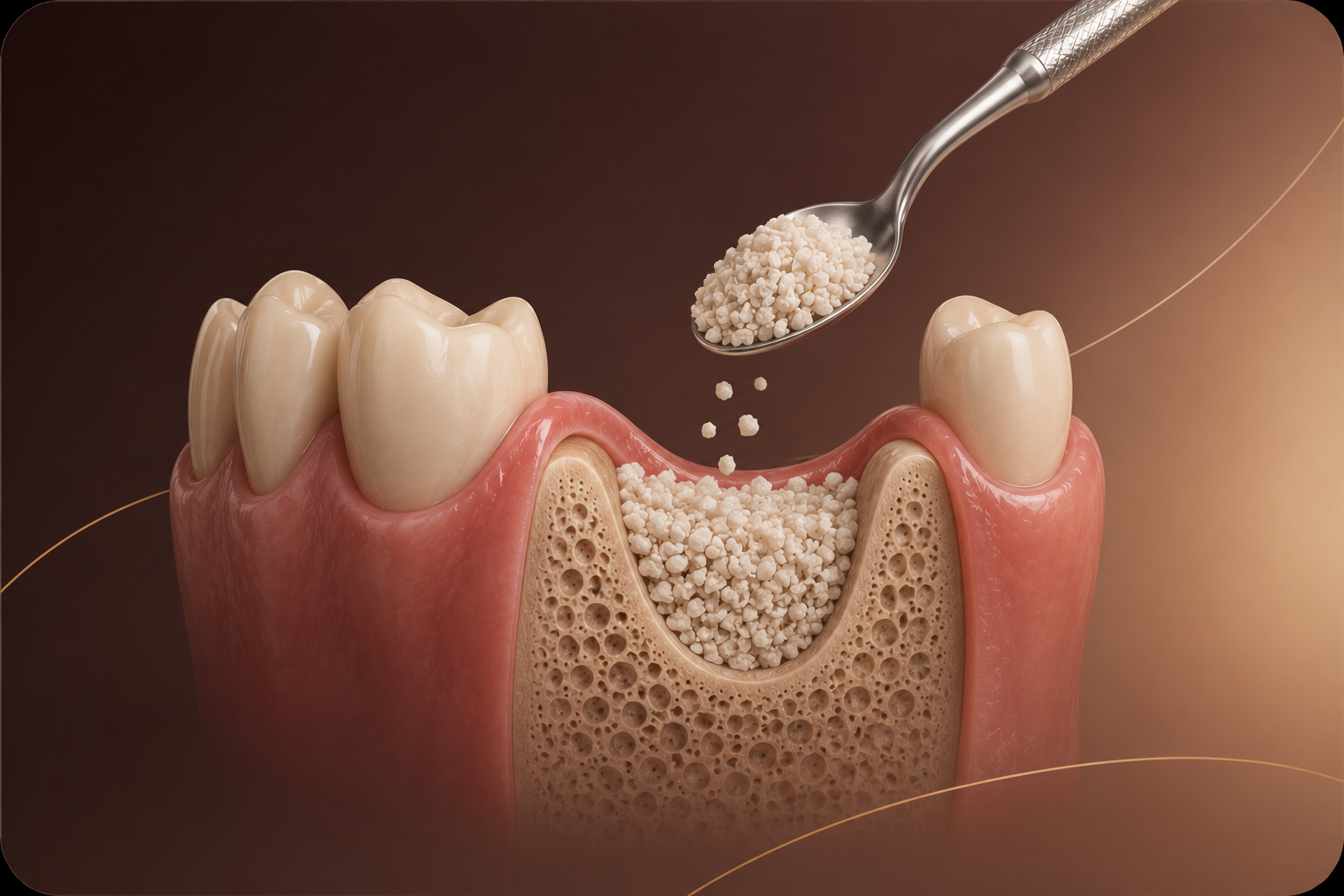
The implant needs long-term stability
An implant is only as good as the bone it stands in. If the foundation is weak, even the best implant will eventually loosen.
You need a reliable second opinion
If you are unsure about an opinion you received elsewhere, send us your scan. We will tell you what we see — even if the answer is that the previous assessment was correct.
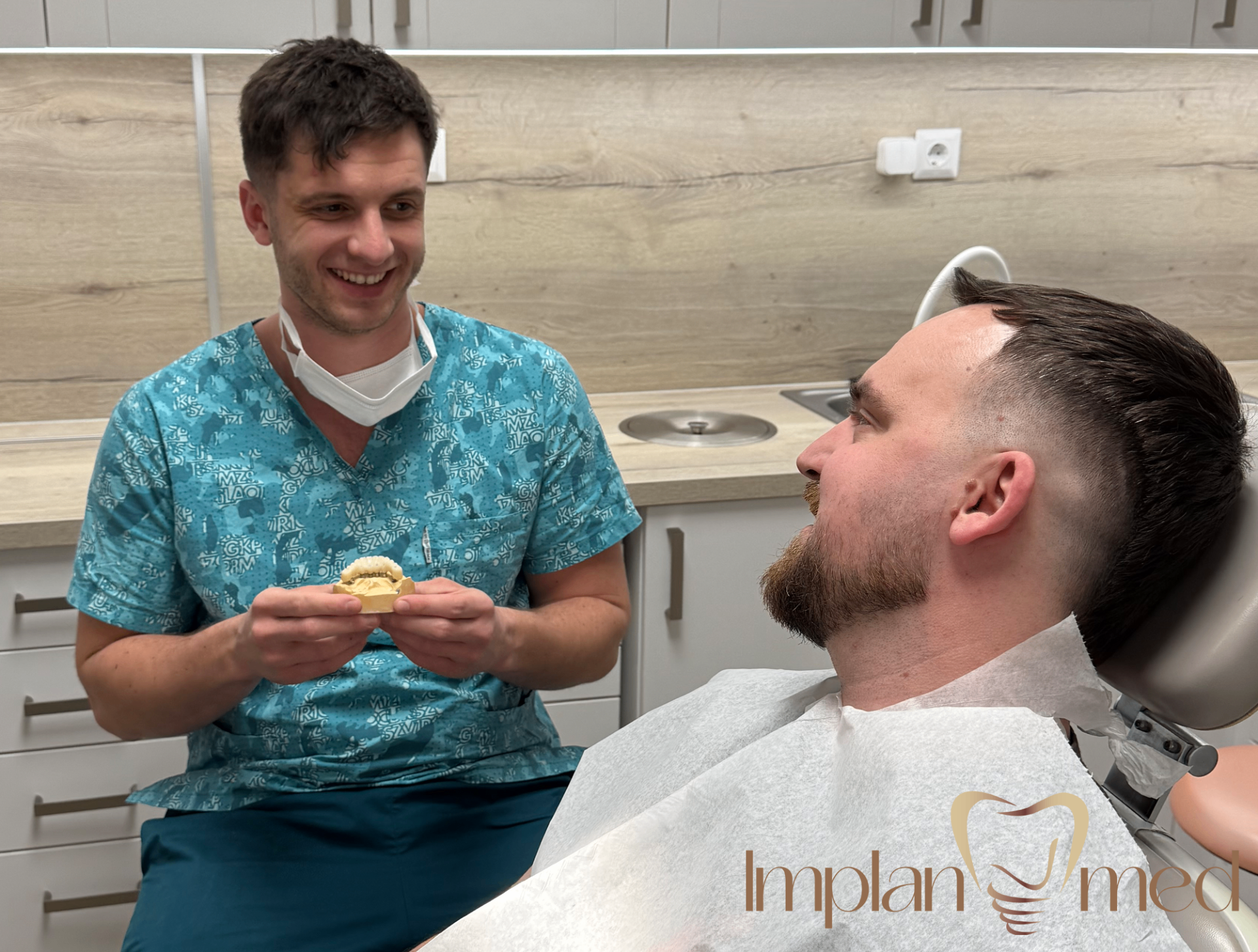
Complex cases are handled by Dr. Olivér Muskát
Bone grafting is not routine dentistry; it is an oral surgery procedure — this is where it truly matters who holds the instrument. Dr. Olivér Muskát has performed hundreds of bone grafts, and he handles all the cases that have been turned away elsewhere.
This means you are not bringing your scan to a general dental clinic, but to someone who sees situations like yours on a daily basis.
How we build up the bone
Precise measurement, a personalized plan, and patience during healing.
3D diagnostics with our own CT
A 3D scan (CBCT) shows not only how much bone is missing, but exactly where, and what this means for your subsequent implant planning. The equipment is right in our clinic, so you don't have to go anywhere else.
Assessing the actual deficit
Not all bone loss requires the same amount of grafting. We measure the real deficit and deduce what is truly necessary. Because of our precise measurements, a smaller procedure is often sufficient than what the patient anticipated.
Choosing the method
The appropriate procedure depends on the extent and location of the bone loss. We also consider how many treatment visits are realistic for you when traveling from abroad.
The procedure
We work carefully and as gently as possible. In certain cases, bone grafting can be done in a single session alongside the implant placement — saving you a surgery and an extra trip.
Healing, then implantation
New bone needs time: usually at least six months. This patience pays off — after regeneration, the bone provides an optimal foundation for a long-term, stable implant.
Precise measurement, in one session — if possible
In-house 3D CT
We have the equipment on-site, allowing us to plan the exact amount of bone substitute needed down to the tenth of a millimeter — and you don't have to travel to a separate facility for a scan.
In one phase, whenever possible
We strive to perform both the bone graft and the implant placement in a single procedure. This saves you time, an extra surgery, and a trip.
Oral surgery expertise
Complex cases are performed by Dr. Olivér Muskát, who has completed hundreds of bone grafts — in a sterile environment, following strict surgical protocols.
What most people ask
No. In many cases, the existing bone is sufficient, and after a precise 3D measurement, we may find it's not needed at all. Sometimes, a smaller procedure is enough compared to what the patient was previously told. This is why it's worth having your scan reviewed before making any decisions.
Usually, yes, because the bone needs at least six months to heal. However, there are cases where the bone graft and the implant placement can be done in the same session — in these instances, the treatment time isn't significantly prolonged. Based on your scan, we will tell you upfront what is possible for you.
The procedure is done under local anesthesia, so you won't feel any pain during it. Afterward, there may be swelling and sensitivity for a few days, which we manage with painkillers. Most of our patients tell us it was less taxing than they expected.
We work with several options, and you have a say in which one we use. Your own bone (autologous) is the most natural solution, where a small amount is taken from another area. We also use synthetic, artificially produced material that does not come from any living organism. A third option is sterile, strictly regulated, processed bone substitute material.
During the first consultation, we will explain which option we think is best for your case and why — and if you exclude any option for principled or personal reasons, we will respect that and find another solution.
This is rare, but it can happen — which is why precise preliminary measurement and careful follow-up are so important. If regeneration doesn't go as expected, we will discuss the options together. We will not leave you to deal with it alone, and we won't pretend everything is fine.
Send us your scan — we'll review it.
If you've been turned away elsewhere or are just unsure about an opinion you received, send us your X-ray or CT scan. Within a few days, we'll let you know what we see, whether a bone graft is necessary, and if so, to what extent. Without obligation — and we will tell you honestly, even if the answer isn't what you hoped for.