A good denture is not just a matter of getting used to it.
Many of our patients believed for years that slipping, pressure points, and adhesive were simply part of wearing dentures. They are not. A bar-retained denture anchored on a few implants sits firmly, doesn't slip while eating, and you don't have to think about it anymore.
When is a bar-retained denture the right solution?
Many patients come to us with a denture that presses, slips, or has never fit properly. In these situations, we can truly help.
Many teeth are missing, or none are left
When most of the dentition is missing, a removable denture is only a partial solution. A few implants provide a stable foundation — that's the difference between "wearable" and "I don't even think about it."
Your current denture holds poorly
This is not your fault and not a matter of getting used to it. If the bone has resorbed over the years, the denture simply has nothing to grip onto. Implants replace this missing support.
You are looking for an affordable but durable solution
A bar-retained denture is more affordable than the fixed All-on-4, yet significantly more stable than traditional removable dentures. For many of our patients, this is the perfect middle ground.
You want to know if the current situation can be improved
We can answer this based on your X-ray. Sometimes the existing denture can be modified — you don't always have to start completely from scratch.
What is the difference between a traditional and a bar-retained denture?
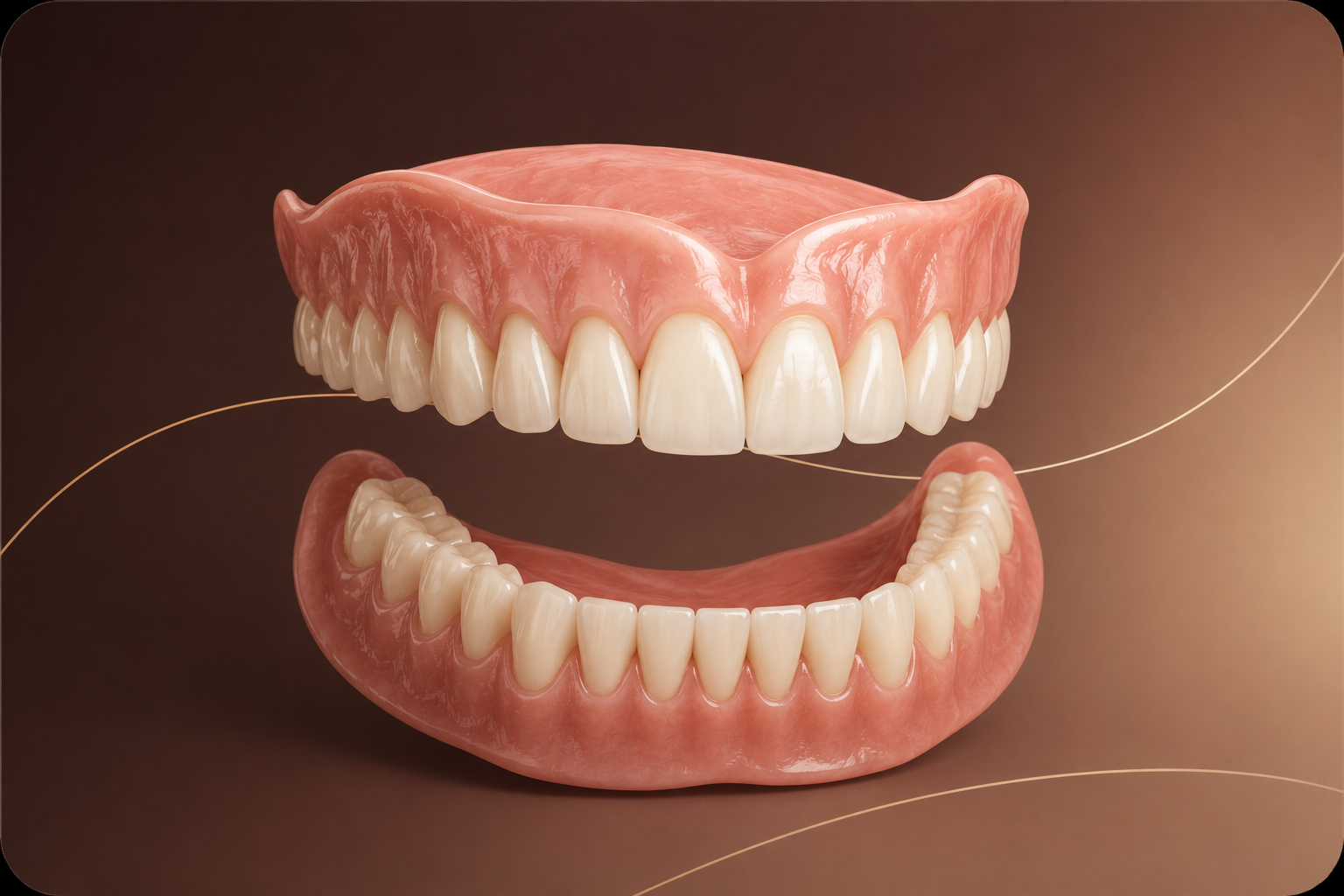
A traditional removable denture rests on the gums and palate. This means that with every bite, it presses against the soft tissue — which is why it causes pressure points, slips, and requires adhesive.
A bar-retained denture, on the other hand, rests on a few implants. The implants are connected by a metal bar, and the denture clips onto it. The load is borne by the bone, not the gums. That is the difference: it doesn't move, it doesn't press, and you eat without having to think about it.
How a bar-retained denture is made
Assessment of the current situation
We look at where you stand today: the bone structure, your existing denture, and what you expect from the solution. We do not judge past experiences — we are here to resolve them.
Choosing the solution and planning the implants
Together, we decide whether a removable, combined, or bar-retained solution suits you best. If we choose the bar-retained option, we plan the number of implants (typically four) and their exact position — so that the denture fits with maximum stability.
Implantation and healing time
After placement, the healing begins: at least 3 months in the lower jaw, at least 4 in the upper. During this time, you wear a temporary denture — you are never left without teeth.
Bar attachment, impression, and fittings
After healing, the bar structure is secured to the implants, followed by an impression or scan. Then comes the adjustment of the new denture — as many times as necessary until the fit and comfort are perfect.
Delivery and follow-up
A new chapter begins with the final denture. Regular check-ups and professional cleaning ensure long-term results — and we remain available if any issues arise.
An investment that pays off every day
Our Austrian and German patients feel the biggest difference here — not just in price, but in how their daily lives change.
Fixed price
A complete implant-supported bar denture — including implantation and the superstructure — is available with us from €5,850.
Everything included
The price includes the consultation, the surgical procedure, the implants, and the precisely fitting bar-retained denture.
Written warranty
We offer a 5-year written warranty on the implants and 3 years on the removable denture — subject to attending annual check-ups, which are free with us.
What most people ask
In many cases, yes. If the condition of the denture and the bone allow, the existing denture can be modified to click onto implants. This is significantly cheaper than entirely new work. Based on the X-ray, we will tell you if this is a viable path for you.
The traditional removable denture is the cheapest solution, but also the least stable. The bar-retained denture sits in the middle: it is more affordable than the fixed All-on-4, yet significantly more stable than a removable one. After the initial assessment, you will receive prices for all three options, and you decide.
Yes, the bar-retained denture must be removed and cleaned at night — this is a prerequisite for a long lifespan. The difference compared to a traditional denture is that during the day it doesn't move, requires no adhesive, and you don't have to worry about it while eating.
From implantation to the final denture takes 4 to 6 months, because the bone needs time. You will wear a temporary denture throughout this period. The number of visits is planned so that you have to travel as little as possible.
This is the most common fear, and it is justified — most of our patients come exactly for this reason. With a bar-retained denture, the bone bears the load, not the gums, so the pressure disappears. We continue making final adjustments until you say everything is perfectly fine.
Let's see what is realistic in your case.
Send us your existing scans, or describe what is wrong with your current denture. Within a few days, we will write back to you outlining the options, how long it would take, and what it would cost. Without obligation — the assessment is yours to keep, even if you ultimately don't choose us.